
Wood at Work 2020 speakers:

Bill Keeton
, University of Vermont
William (Bill) Keeton is a Professor of Forest Ecology and Forestry within the Rubenstein School at the University of Vermont. His research interests include forest carbon management and sustainable forest management policy and practice. He has researched and written extensively on the carbon dynamics of old growth and primary forests.
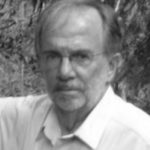
Chad Oliver
, Yale School of Forestry and Environmental Studies
Chad Oliver is a professor emeritus at Yale University’s School of Forestry and Environmental Studies, where he served as Pinchot Professor of Forestry and Environmental Studies as well as the Director of the Global Institute of Sustainable Forestry. His most recent book is titled ‘Global Resources and the Environment,’ co-written with Fatuma Arf Oliver.

Galina Churkina
, Potsdam Institute
Galina Churkina is a Visiting Scientist at Potsdam Institute for Climate Impact Research, where she works in the group Forest and Ecosystem Resilience. Her research focuses on “identifying sustainable pathways of urban growth,” which, among other things, has led to a better understanding of the urban carbon cycle. Many of you have read her recent paper “Buildings as a global carbon sink” in Nature Sustainability.
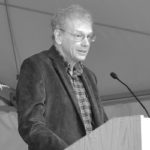
Peter Pinchot
, Pinchot Institute for Conservation
Peter is the Director of the Institute's Ecomadera Project in Ecuador and President of Ecomadera Forest Conservation LLC, representing the non-profit and social venture sides of creating an economic alternative to rapid deforestation in Ecuador’s northern coastal plain. He received his Masters in Environmental Studies at the Yale School of Forestry and Environmental Studies. Previously, Peter has been an organic dairy farmer in upstate New York, a partner in a ghetto rehabilitation social venture in Brooklyn, NY, founder of the Pocono Streams Project, and for the past 10 years, the Director of the Milford Experimental Forest, engaged in research on white tailed deer management, American chestnut restoration, and community forestry.

Tim Searchinger
, World Resources Institute
Tim Searchinger is a Research Scholar at the Center for Policy Research on Energy and the Environment at Princeton University, and a Senior Fellow at the World Resources Institute. His work focuses on how to feed a growing world population while reducing the environmental consequences of agriculture. Some of his recent work is focusing on the land use dynamics of increased global timber demand.
Wood at Work 2018 speakers:

John Patkau
, Patkau Architects
Keynote Address: Wood at Work & Play
John Patkau founded Patkau Architects with Patricia Patkau in 1978. He is a Fellow of the Royal Architecture Institute of Canada, an Honorary Fellow of the American Institute of Architects, an International Fellow of the Royal Institute of British Architects, a member of the American Society of Landscape Architects, a member of the Royal Canadian Academy of Art, a recipient of the Royal Architecture Institute of Canada Gold Medal, and a Member of the Order of Canada. In recent years he has served as Norman R. Foster Visiting Professor at the Yale University School of Architecture.

Michael Green
, Michael Green Architecture
Keynote Address: Evolutions and solutions; MGA and Katerra’s explorations, systems and typologies in mass timber
Michael founded Michael Green Architecture in 2012 with a focus on advanced wood buildings that support community, health and the environment. Michael is known for his research, leadership and advocacy in promoting the use of wood in the built environment lecturing internationally on the subject. In addition to MGA, Michael founded the not-for-profit school DBR | Design Build Research to focus on progressive architecture, research, education and innovation. Based in Vancouver, BC, Michael and his team strive to contribute to meaningful and sustainable change in building through innovation in construction sciences and design. Michael is a Fellow of the Royal Architectural Institute of Canada and has been honoured with North America’s most prestigious awards, including 2 RAIC Innovation Awards and 3 Governor General’s Medals (the highest awards for a Canadian architect), as well as numerous North American Wood Design Awards and International Interior Design Awards. In 2014, Michael received an honourary doctorate degree from the University of British Columbia.

Liat Margolis
, University of Toronto John H. Daniels Faculty of Architecture, Landscape and Design
Liat Margolis is Associate Professor of Landscape Architecture, the Director of the Faculty's Master of Landscape Architecture program, and Assistant Dean of Research. Margolis is also the Director of the Daniels Faculty's Green Roof Innovation Testing Laboratory. Margolis’ research focuses on the knowledge transfer of multi-performance materials and technologies across disciplines, and she is most interested in understanding and articulating the emerging relevance of performative landscapes as urban infrastructure.
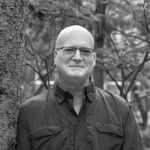
Robert Wright
, University of Toronto Faculty of Forestry
Within and outside of appointment as the Dean of the Forestry Faculty at U of T, Robert Wright’s work is design-centered and extremely eclectic in nature. His notion of design does not privilege the traditional professional disciplines of Architecture, Landscape Architecture or Urban design. He places his work within a more contemporary and trans-disciplinary framework. As Both an educator and as a design practitioner, he holds a strong belief that “Design is built theory” meaning that the translation from thought and concept to built works is primary and essential to design discourse. Having had training in both Ecology and Landscape Architecture places design as a practice that must at its essence deal with context. The art of design is not merely “object” making but rather the interplay of Nature, Person, Community, City and Place.

Sarah Jane Wilson
, University of Michigan
Sarah is a forest geographer with a background in ecology and ethnography. She seeks to identify ways to maximize forest recovery and conservation in rural landscapes while enhancing the sustainability of people’s livelihoods. She currently works with community-based forest restoration and conservation enterprises in Andean Ecuador, the Nepalese Himalaya, and Guatemala’s Peten. She is also dedicated to environmental and science education. In addition to founding a grad-undergrad student mentorship program at McGill University, she has worked with students of all ages and trained educators to teach through such organizations as Let’s Talk Science, the Tomlinson Teaching Project, the Appalachian Mountain Club, and The American Museum of Natural History.

Shane Williamson
, University of Toronto, John H. Daniels Faculty of Architecture, Landscape and Design
R. Shane Williamson is the director of the Daniels Faculty's Master of Architecture program. He is Principal of Williamson Williamson Inc., a Toronto-based architecture and design studio that he founded with his partner, Betsy Williamson, in 2007. Williamson’s research and creative practice employs advanced digital tools as a means to critically engage traditional modes of construction and tectonic expression. Ongoing research seeks to situate digital fabrication and wood construction in a broader cultural context and link theories of design and technology respective of sustainable building strategies.

Lars Laestadius
, Laestadius Consulting LLC; Swedish University of Agricultural Sciences
The Great forest in the North: The need for strategy and collaboration
A Swedish national living in Washington, DC, Lars has a forestry degree from the Swedish University of Agricultural Sciences (SLU) and a PhD in Industrial Forestry Operations from Virginia Tech. After a decade of research and six years of research administrator at SLU and the European Commission, he joined the World Resources Institute in 1998 and led work to map intact forest landscapes in Russia, to produce a guide to sustainable procurement of wood and paper products, to create the Forest Legality Alliance, and to map global opportunities for forest landscape restoration. As a consultant, Lars has worked for the ISEAL Alliance and FAO.

Thais Linhares-Juvenal
, UN Food and Agriculture Organization
Thais' work within the FAO is focused on governance and the economy of sustainable forest management. Prior to this she worked at The Brazilian Forest Service and then became the Director of Climate Change at the Brazilian Environment Department. She was also Brazil's climate negotiator in the UNFCCC negotiations, where she played an important role in the development of the REDD system (on deforestation and forest degradation) which aims to prevent deforestation of tropical forests.
Peter Pinchot
, Pinchot Institute for Conservation
Peter is the Director of the Institute's Ecomadera Project in Ecuador and President of Ecomadera Forest Conservation LLC, representing the non-profit and social venture sides of creating an economic alternative to rapid deforestation in Ecuador’s northern coastal plain. He received his Masters in Environmental Studies at the Yale School of Forestry and Environmental Studies. Previously, Peter has been an organic dairy farmer in upstate New York, a partner in a ghetto rehabilitation social venture in Brooklyn, NY, founder of the Pocono Streams Project, and for the past 10 years, the Director of the Milford Experimental Forest, engaged in research on white tailed deer management, American chestnut restoration, and community forestry.
Rob Keen
, Forests Ontario
Rob Keen is the CEO of Forests Ontario, a registered charity and non-profit organization. Their goal is to create healthy forests for healthy communities by providing tree planting and maintenance programs, delivering forest education programs, and engaging the community in learning more about the benefits of forests.

Leslie Parker
, REIL Network
Leslie Parker is a long-time champion of renewable energy, and is the driving force behind REIL, an international policy, finance and technology sub-network of REEEP that brings together the “agents of change” who inform and create system-wide strategies to scale up clean energy and to address climate change. REIL arose from work Leslie did as an intern to the International Energy Agency in 2002. Prior to founding REIL, she had 10 years experience in various posts in NYC and Washington State government, in the environment and social services fields, managing policy as well as agency budgets. She holds both a B.A. (Bryn Mawr College) and M.A. (New York University) in Art History, and worked in the European Sculpture and Decorative Arts Department of the Metropolitan Museum for 8 years.

Jane Hutton
, University of Waterloo
Jane Hutton is a landscape architect, whose research looks at the expanded relations of material practice in design, examining linkages between the sources and sites of common building materials. She is an Assistant Professor in the Department of Architecture at the University of Waterloo and the co-author of Wood Urbanism: From the Molecular to the Territorial (Actar, 2018) with Daniel Ibañez and Kiel Moe.
Paul Fuge
, Naturally Durable
Paul Fuge has been involved with forests and wood manufacturing for 45 years. The business model started with a reverence for the forest connected to manufacturing for buildings and furnishings in a manner that retained the image of the forest and created long lasting, beautiful products that serve both the forest and the human need for, beauty, comfort and shelter. As a board member and chairman of the board of the US based Certified Forest Products Council, he worked to foster awareness of FSC certification and to facilitate trade in FSC lumber and finished products in the Americas.

Donald Chong
, HDR
Donald Chong will provide ‘field notes’ on his architectural portfolio in which competing structural and material elements saw the emergence or, perhaps re-emergence, of wood — as the recurring and progressive material of choice for his projects in both rural and urban settings.

Dominique Briand
, Structure Fusion
A construction enthusiast, Dominique Briand, mechanical and robotics engineer, founded in 2007 Charpentes Montmorency, specialized in high-end wooden homes construction. With his team, he produced many residential buildings and several commercial ones tailored his customers’ needs all across Quebec. In 2011 he sold the company and founded Massif Technologies, specialized in timber engineering services, especially for the expanding non-residential market. With his team, he directed several projects combining wood with other materials. In 2013, Canam acquired two-thirds of the company's assets to create Structure Fusion and thus meeting customer demands by filling the product offering. Dominique is CEO of Structure Fusion.

Christine Leduc
, EACOM
Christine currently works as the Director of Public Affairs with EACOM Timber Corporations. Prior to this she held policy positions in the office of the Ontario Minister of Natural Resources and the Ontario Forest Industries Association and in 2015 was a recipient of the Prince of Wales Award for Sustainable Forestry and the Ontario Professional Foresters Association Fernow Award. Christine is a member of the advisory council for the It Takes a Forest campaign. Through her preprofessional endeavours with Forests Ontario, she has firsthand knowledge of the power that connecting youth to nature has in influencing fields of study. She is a graduate of UofT’s Master of Forest Conservation program.

Leigh Fox
, Fair Trade Carbon Uganda Ltd, Rainforest Field Services
Leigh Fox is a professional treeplanter and founding Director of Fair Trade Carbon Uganda Ltd., a treeplanting and forest management company operating in Western Uganda since 2005. Joint venture contracts with farmers, a 'work for school fees' program for students, and an employee and family health care policy are all features of an African treeplanting company that was conceptualized on a cutblock and financed by trees planted on the West Coast of BC. Leigh holds a BA in Political Science and an MSc in Forestry. His Graduate work focused on Forestry and Food Security in Africa.

Grace Jeffers
, Grace Jeffers Design
Grace Jeffers is an esteemed design historian who focuses exclusively on materials. A graduate of the Bard Graduate Center, Jeffers is intent on considering the "big picture" of design. Her unique approach blends material science with social history, art history and design practice. She teaches people how to think differently about design.

Jan Schotte
, Quadrangle Architects
Jan Schotte is an architectural project manager at Quadrangle Architects, and has been responsible for an increasing number of mass-timber developments in Toronto's Liberty Village district.

Bram Gunther
, Natural Areas Conservancy
Bram Gunther is Co-Director of the Urban Field Station, the science and research hub of Forestry, Horticulture, and Natural Resources of the New York City Parks Department, which is co-run by the U.S. Forest Service. He was previously Chief of Forestry, Horticulture, and Natural Resources. He is also Co-Founder and President of the Natural Areas Conservancy, a public/private partnership established to unify the City's efforts to conserve, restore, and protect tens of thousands of acres of municipal forests, wetlands, and grasslands. He joined the New York City Parks Department in 1991 as an Urban Park Ranger. Three years later, he became the Citywide Director of the Rangers. He transferred to Central Forestry in 2000 and first as Deputy Chief and then as Chief oversaw the growth of the division. He has a bachelor’s degree in American literature from State University of New York at Purchase and a master’s degree in environmental management from the Yale School of Forestry & Environmental Studies.

Merritt Bucholz
, Bucholz McEvoy Architects
Together with Karen McEvoy he practices architecture as part of Bucholz McEvoy Architects. Bucholz McEvoy Architects are noted for award winning low energy designs, and have twice represented Ireland at the Architecture Biennale in Venice. Merritt Bucholz is founding Professor of Architecture at the School of Architecture University of Limerick (SAUL) and has been leading SAUL since its inception in 2005. In 2009 Merritt founded SAUL’s research arm, the Intelligence Unit (IU) through which the research agenda of the school is directed. Merritt qualified with a B.Arch Cornell University and a M.Arch, Princeton University, and is a Member of the Royal Institute of Architects of Ireland.

David Barmon
, Urban Lumber Sawmill, and Furniture Builder
Over the last decade, David has been a strong advocate not only for the better utilization of wood from urban tree removals but also for intentionally growing urban trees for lumber. In 2015, David worked with the Oregon State legislature to fund the Clackamas County Urban Lumber Pilot Project, a feasibility study to determine the economics of a more holistic urban forestry system. David envisions a future where urban trees can be planted and managed to yield high quality lumber. This will give landowners an incentive to plant billions of new trees around the world and stop the rampant waste of chopping up city's trees.

Joe Vaccaro
, Ontario Home Builders
Joe Vaccaro is the CEO of the Ontario Home Builders' Association. His previous experience includes serving as the VP of Policy and Government Relations at the Building Industry and Land Development Association. The Ontario Home Builders’ Association is the voice of the residential construction industry in Ontario and represents an industry that contributes over $34 billion dollars to Ontario’s economy and employs more than 334,000 people across the province.
Eric Davies
, University of Toronto Faculty of Forestry
Eric Davies is a PhD candidate at University of Toronto’s Faculty of Forestry. He was the coordinator of the Toronto Ravine Revitalization Study for which he received the Rising Star award of the Aster Awards 2016.

Mike Yorke
, Carpenters' Union Local 27
Mike Yorke, President and Senior Business Representative of Carpenters Local 27 of the Carpenters District Council of Ontario, has over 25 years of experience in Ontario’s unionized construction industry. Local 27 represents 7000 members of the Council 22,000 full membership. As President, Mr. Yorke has extensive knowledge of collective bargaining and arbitration issues as well as being involved in numerous political, community and training initiatives.
John Patkau
, Patkau Architects
Keynote Address: Wood at Work & Play
John Patkau founded Patkau Architects with Patricia Patkau in 1978. He is a Fellow of the Royal Architecture Institute of Canada, an Honorary Fellow of the American Institute of Architects, an International Fellow of the Royal Institute of British Architects, a member of the American Society of Landscape Architects, a member of the Royal Canadian Academy of Art, a recipient of the Royal Architecture Institute of Canada Gold Medal, and a Member of the Order of Canada. In recent years he has served as Norman R. Foster Visiting Professor at the Yale University School of Architecture.
Michael Green
, Michael Green Architecture
Keynote Address: Evolutions and solutions; MGA and Katerra’s explorations, systems and typologies in mass timber
Michael founded Michael Green Architecture in 2012 with a focus on advanced wood buildings that support community, health and the environment. Michael is known for his research, leadership and advocacy in promoting the use of wood in the built environment lecturing internationally on the subject. In addition to MGA, Michael founded the not-for-profit school DBR | Design Build Research to focus on progressive architecture, research, education and innovation. Based in Vancouver, BC, Michael and his team strive to contribute to meaningful and sustainable change in building through innovation in construction sciences and design. Michael is a Fellow of the Royal Architectural Institute of Canada and has been honoured with North America’s most prestigious awards, including 2 RAIC Innovation Awards and 3 Governor General’s Medals (the highest awards for a Canadian architect), as well as numerous North American Wood Design Awards and International Interior Design Awards. In 2014, Michael received an honourary doctorate degree from the University of British Columbia.
Liat Margolis
, University of Toronto John H. Daniels Faculty of Architecture, Landscape and Design
Liat Margolis is Associate Professor of Landscape Architecture, the Director of the Faculty's Master of Landscape Architecture program, and Assistant Dean of Research. Margolis is also the Director of the Daniels Faculty's Green Roof Innovation Testing Laboratory. Margolis’ research focuses on the knowledge transfer of multi-performance materials and technologies across disciplines, and she is most interested in understanding and articulating the emerging relevance of performative landscapes as urban infrastructure.
Robert Wright
, University of Toronto Faculty of Forestry
Within and outside of appointment as the Dean of the Forestry Faculty at U of T, Robert Wright’s work is design-centered and extremely eclectic in nature. His notion of design does not privilege the traditional professional disciplines of Architecture, Landscape Architecture or Urban design. He places his work within a more contemporary and trans-disciplinary framework. As Both an educator and as a design practitioner, he holds a strong belief that “Design is built theory” meaning that the translation from thought and concept to built works is primary and essential to design discourse. Having had training in both Ecology and Landscape Architecture places design as a practice that must at its essence deal with context. The art of design is not merely “object” making but rather the interplay of Nature, Person, Community, City and Place.
Sarah Jane Wilson
, University of Michigan
Sarah is a forest geographer with a background in ecology and ethnography. She seeks to identify ways to maximize forest recovery and conservation in rural landscapes while enhancing the sustainability of people’s livelihoods. She currently works with community-based forest restoration and conservation enterprises in Andean Ecuador, the Nepalese Himalaya, and Guatemala’s Peten. She is also dedicated to environmental and science education. In addition to founding a grad-undergrad student mentorship program at McGill University, she has worked with students of all ages and trained educators to teach through such organizations as Let’s Talk Science, the Tomlinson Teaching Project, the Appalachian Mountain Club, and The American Museum of Natural History.
Shane Williamson
, University of Toronto, John H. Daniels Faculty of Architecture, Landscape and Design
R. Shane Williamson is the director of the Daniels Faculty's Master of Architecture program. He is Principal of Williamson Williamson Inc., a Toronto-based architecture and design studio that he founded with his partner, Betsy Williamson, in 2007. Williamson’s research and creative practice employs advanced digital tools as a means to critically engage traditional modes of construction and tectonic expression. Ongoing research seeks to situate digital fabrication and wood construction in a broader cultural context and link theories of design and technology respective of sustainable building strategies.
Lars Laestadius
, Laestadius Consulting LLC; Swedish University of Agricultural Sciences
The Great forest in the North: The need for strategy and collaboration
A Swedish national living in Washington, DC, Lars has a forestry degree from the Swedish University of Agricultural Sciences (SLU) and a PhD in Industrial Forestry Operations from Virginia Tech. After a decade of research and six years of research administrator at SLU and the European Commission, he joined the World Resources Institute in 1998 and led work to map intact forest landscapes in Russia, to produce a guide to sustainable procurement of wood and paper products, to create the Forest Legality Alliance, and to map global opportunities for forest landscape restoration. As a consultant, Lars has worked for the ISEAL Alliance and FAO.
Thais Linhares-Juvenal
, UN Food and Agriculture Organization
Thais' work within the FAO is focused on governance and the economy of sustainable forest management. Prior to this she worked at The Brazilian Forest Service and then became the Director of Climate Change at the Brazilian Environment Department. She was also Brazil's climate negotiator in the UNFCCC negotiations, where she played an important role in the development of the REDD system (on deforestation and forest degradation) which aims to prevent deforestation of tropical forests.
Peter Pinchot
, Pinchot Institute for Conservation
Peter is the Director of the Institute's Ecomadera Project in Ecuador and President of Ecomadera Forest Conservation LLC, representing the non-profit and social venture sides of creating an economic alternative to rapid deforestation in Ecuador’s northern coastal plain. He received his Masters in Environmental Studies at the Yale School of Forestry and Environmental Studies. Previously, Peter has been an organic dairy farmer in upstate New York, a partner in a ghetto rehabilitation social venture in Brooklyn, NY, founder of the Pocono Streams Project, and for the past 10 years, the Director of the Milford Experimental Forest, engaged in research on white tailed deer management, American chestnut restoration, and community forestry.
Rob Keen
, Forests Ontario
Rob Keen is the CEO of Forests Ontario, a registered charity and non-profit organization. Their goal is to create healthy forests for healthy communities by providing tree planting and maintenance programs, delivering forest education programs, and engaging the community in learning more about the benefits of forests.
Leslie Parker
, REIL Network
Leslie Parker is a long-time champion of renewable energy, and is the driving force behind REIL, an international policy, finance and technology sub-network of REEEP that brings together the “agents of change” who inform and create system-wide strategies to scale up clean energy and to address climate change. REIL arose from work Leslie did as an intern to the International Energy Agency in 2002. Prior to founding REIL, she had 10 years experience in various posts in NYC and Washington State government, in the environment and social services fields, managing policy as well as agency budgets. She holds both a B.A. (Bryn Mawr College) and M.A. (New York University) in Art History, and worked in the European Sculpture and Decorative Arts Department of the Metropolitan Museum for 8 years.
Jane Hutton
, University of Waterloo
Jane Hutton is a landscape architect, whose research looks at the expanded relations of material practice in design, examining linkages between the sources and sites of common building materials. She is an Assistant Professor in the Department of Architecture at the University of Waterloo and the co-author of Wood Urbanism: From the Molecular to the Territorial (Actar, 2018) with Daniel Ibañez and Kiel Moe.
Paul Fuge
, Naturally Durable
Paul Fuge has been involved with forests and wood manufacturing for 45 years. The business model started with a reverence for the forest connected to manufacturing for buildings and furnishings in a manner that retained the image of the forest and created long lasting, beautiful products that serve both the forest and the human need for, beauty, comfort and shelter. As a board member and chairman of the board of the US based Certified Forest Products Council, he worked to foster awareness of FSC certification and to facilitate trade in FSC lumber and finished products in the Americas.
Donald Chong
, HDR
Donald Chong will provide ‘field notes’ on his architectural portfolio in which competing structural and material elements saw the emergence or, perhaps re-emergence, of wood — as the recurring and progressive material of choice for his projects in both rural and urban settings.
Dominique Briand
, Structure Fusion
A construction enthusiast, Dominique Briand, mechanical and robotics engineer, founded in 2007 Charpentes Montmorency, specialized in high-end wooden homes construction. With his team, he produced many residential buildings and several commercial ones tailored his customers’ needs all across Quebec. In 2011 he sold the company and founded Massif Technologies, specialized in timber engineering services, especially for the expanding non-residential market. With his team, he directed several projects combining wood with other materials. In 2013, Canam acquired two-thirds of the company's assets to create Structure Fusion and thus meeting customer demands by filling the product offering. Dominique is CEO of Structure Fusion.
Christine Leduc
, EACOM
Christine currently works as the Director of Public Affairs with EACOM Timber Corporations. Prior to this she held policy positions in the office of the Ontario Minister of Natural Resources and the Ontario Forest Industries Association and in 2015 was a recipient of the Prince of Wales Award for Sustainable Forestry and the Ontario Professional Foresters Association Fernow Award. Christine is a member of the advisory council for the It Takes a Forest campaign. Through her preprofessional endeavours with Forests Ontario, she has firsthand knowledge of the power that connecting youth to nature has in influencing fields of study. She is a graduate of UofT’s Master of Forest Conservation program.
Leigh Fox
, Fair Trade Carbon Uganda Ltd, Rainforest Field Services
Leigh Fox is a professional treeplanter and founding Director of Fair Trade Carbon Uganda Ltd., a treeplanting and forest management company operating in Western Uganda since 2005. Joint venture contracts with farmers, a 'work for school fees' program for students, and an employee and family health care policy are all features of an African treeplanting company that was conceptualized on a cutblock and financed by trees planted on the West Coast of BC. Leigh holds a BA in Political Science and an MSc in Forestry. His Graduate work focused on Forestry and Food Security in Africa.
Grace Jeffers
, Grace Jeffers Design
Grace Jeffers is an esteemed design historian who focuses exclusively on materials. A graduate of the Bard Graduate Center, Jeffers is intent on considering the "big picture" of design. Her unique approach blends material science with social history, art history and design practice. She teaches people how to think differently about design.
Jan Schotte
, Quadrangle Architects
Jan Schotte is an architectural project manager at Quadrangle Architects, and has been responsible for an increasing number of mass-timber developments in Toronto's Liberty Village district.
Bram Gunther
, Natural Areas Conservancy
Bram Gunther is Co-Director of the Urban Field Station, the science and research hub of Forestry, Horticulture, and Natural Resources of the New York City Parks Department, which is co-run by the U.S. Forest Service. He was previously Chief of Forestry, Horticulture, and Natural Resources. He is also Co-Founder and President of the Natural Areas Conservancy, a public/private partnership established to unify the City's efforts to conserve, restore, and protect tens of thousands of acres of municipal forests, wetlands, and grasslands. He joined the New York City Parks Department in 1991 as an Urban Park Ranger. Three years later, he became the Citywide Director of the Rangers. He transferred to Central Forestry in 2000 and first as Deputy Chief and then as Chief oversaw the growth of the division. He has a bachelor’s degree in American literature from State University of New York at Purchase and a master’s degree in environmental management from the Yale School of Forestry & Environmental Studies.
Merritt Bucholz
, Bucholz McEvoy Architects
Together with Karen McEvoy he practices architecture as part of Bucholz McEvoy Architects. Bucholz McEvoy Architects are noted for award winning low energy designs, and have twice represented Ireland at the Architecture Biennale in Venice. Merritt Bucholz is founding Professor of Architecture at the School of Architecture University of Limerick (SAUL) and has been leading SAUL since its inception in 2005. In 2009 Merritt founded SAUL’s research arm, the Intelligence Unit (IU) through which the research agenda of the school is directed. Merritt qualified with a B.Arch Cornell University and a M.Arch, Princeton University, and is a Member of the Royal Institute of Architects of Ireland.
David Barmon
, Urban Lumber Sawmill, and Furniture Builder
Over the last decade, David has been a strong advocate not only for the better utilization of wood from urban tree removals but also for intentionally growing urban trees for lumber. In 2015, David worked with the Oregon State legislature to fund the Clackamas County Urban Lumber Pilot Project, a feasibility study to determine the economics of a more holistic urban forestry system. David envisions a future where urban trees can be planted and managed to yield high quality lumber. This will give landowners an incentive to plant billions of new trees around the world and stop the rampant waste of chopping up city's trees.
Joe Vaccaro
, Ontario Home Builders
Joe Vaccaro is the CEO of the Ontario Home Builders' Association. His previous experience includes serving as the VP of Policy and Government Relations at the Building Industry and Land Development Association. The Ontario Home Builders’ Association is the voice of the residential construction industry in Ontario and represents an industry that contributes over $34 billion dollars to Ontario’s economy and employs more than 334,000 people across the province.
Eric Davies
, University of Toronto Faculty of Forestry
Eric Davies is a PhD candidate at University of Toronto’s Faculty of Forestry. He was the coordinator of the Toronto Ravine Revitalization Study for which he received the Rising Star award of the Aster Awards 2016.
Mike Yorke
, Carpenters' Union Local 27
Mike Yorke, President and Senior Business Representative of Carpenters Local 27 of the Carpenters District Council of Ontario, has over 25 years of experience in Ontario’s unionized construction industry. Local 27 represents 7000 members of the Council 22,000 full membership. As President, Mr. Yorke has extensive knowledge of collective bargaining and arbitration issues as well as being involved in numerous political, community and training initiatives.
Wood at Work 2017 speakers:

Richard Kroeker
, Richard Kroeker Design
Keynote Address: Wood as a Link Between Design, Sustainability and Cultural Value
We are often made aware of the connection between our forests and large scale industry, and overlook the connections between communities and the forests in which they exist. Resource extraction offers limited returns for local communities. The talk will take us through a design process that focusses on ways of thinking about wood, and how our forests can sustain us at the community scale through a local value-added process.Richard focuses on issues related to cultural continuity and environmental response. He has done work with indigenous communities whose culture and physical environment are under threat from external forces. He is interested in the strategies adopted by cultures with close links to the natural world as an important precedent for the contemporary practice of architecture, and as a source of information about who we are and where we are. Richard's design practice in Halifax, Nova Scotia, Canada prioritizes usability and ecological sustainability and takes inspiration from early Native American designs and materials.

Stéphane Berthier
, Meso Studio, Paris, France
Keynote Address: Creative Innovations in Timber Design in France, from the 1950s to Present Day (Innovation et création dans l’architecture de bois en France, de 1950 à aujourd’hui) This talk follows the resurgence of timber architecture in France, from second half of the 20th century to present day. Beginning with an overview of the wood construction experiments of a material that was considered archaic after WWII, then raised to the status of a 'modern material' from the 1960s, to eventually being acknowledged as the leading building material for ecological construction. The lecture will examine timber's transitional use from arts and crafts to industrialization via the evolution of construction methods, and from hand-operated tools to mechanical to digital, and these influences on architecture.Stéphane is an architect graduate from EPFL in Switzerland, and a PhD Tutor/Lecturer at l'Ecole Nationale Supérieure d’Architecture (ENSA) de Versailles. He studies architecture as a field of experimentation of technical innovations. [Download lecture details, en français et anglais, as a pdf]

Frances Seymour
, World Resources Institute (WRI)
McGill / MSSI lecture: Tropical Forests and Climate Change: How research can help transform a problem into a solution Keynote address: "Thinking Globally, Trying to Act Locally -- An Update" Just how important is it to conserve and restore the world's tropical forests? Frances will speak about the big picture of forests climate change through the lens of her global research and policy advising, with examples of strategic interventions at a variety of scales, including sustainably sourced timber and new policy frameworks.
Frances Seymour is a Distinguished Senior Fellow at WRI, where she conducts research and writing on forest and governance issues. A former Senior Fellow at the Center for Global Development, she also served as Director General of the Center for International Forestry Research (CIFOR) from 2006 to 2012. Prior to that, Frances was the founding director of the WRI's Institutions and Governance Program (now the Governance Center) at WRI. She is the lead author of the book, Why Forests? Why Now? The Science, Economics, and Politics of Tropical Forests and Climate Change. She has been awarded France’s Order of Agricultural Merit.
David Barmon
, Urban Lumber Sawmill, and Furniture Builder
Towards a more holistic urban forestry system Every year in North America, billions of dollars of potential lumber from urban trees is destroyed as firewood, mulched or taken to the landfill. Every tree in every city will die. Why not have a plan for the wood? If we can grow food in the city, why not grow lumber in the city too? David Barmon will discuss not only how to better utilize the wood from current removals but also retool urban forestry to plan for the future with urban lumber in mind.
Over the last decade, David has been a strong advocate not only for the better utilization of wood from urban tree removals but also for intentionally growing urban trees for lumber. In 2015, David worked with the Oregon State legislature to fund the Clackamas County Urban Lumber Pilot Project, a feasibility study to determine the economics of a more holistic urban forestry system. David envisions a future where urban trees can be planted and managed to yield high quality lumber. This will give landowners an incentive to plant billions of new trees around the world and stop the rampant waste of chopping up city's trees.
Andrew Brose
, MIT
Periphery Timber For populations living in regions with extremely harsh climates and poor access to durable construction materials, building thermally comfortable homes is a challenge. Our MIT research group is working with the Tata Foundation in Northern India and central Nepal to develop new solutions for insulated, durable and affordable housing, focusing on the use of plant fiber-cement composite wall panels which are easily produced on site using available wood waste materials from past construction projects.
Andrew is currently at MIT researching material solutions for affordable housing in resource-limited settings. Andrew has worked for an architecture firm in East Africa, and managed the design and the construction of schools, hospitals and housing projects built with maximum labor and minimal imported materials.
Donald Chong
HDR
Donald Chong will provide ‘field notes’ on his architectural portfolio in which competing structural and material elements saw the emergence or, perhaps re-emergence, of wood — as the recurring and progressive material of choice for his projects in both rural and urban settings.

Jean-François Desaliers
, Eden Canada
Integrated landscapes; Trees, food and education near and far afield Eden Canada's mission is to fight climate change through the conservation and restoration of ecosystems and the preservation of biodiversity. Its strategy is to educate the most vulnerable populations and employers on good management of natural resources, and its tree-planting programs provide carbon sequestration and employment to people in developing countries.
Leigh Fox
, Fair Trade Carbon Uganda Ltd, Rainforest Field Services
Hustle Trees: A Treeplanter's Guide to Community Forestry in Africa Leigh is a professional treeplanter and the founding Director of Fair Trade Carbon Uganda, a treeplanting and forest management company operating in Western Uganda since 2005. The company was conceptualized on a cutblock and financed by trees planted on the West Coast of British Columbia in Canada. Its features include joint venture contracts with farmers, a 'work for school fees' program for students, and an employee and family health care policy. Leigh holds a BA in Political Science with a focus on international development and is completing an MSc thesis on forestry and food security in Africa.

Scott Francisco
, Founder of Wood at Work
Wood as a focal thing: How a solar powered building material can transform our relationship with our environments and each other Scott is the founder and director of Pilot Projects Design Collective in Montreal and New York City. Pilot Projects works with organizations and individuals to co-create a better world through concrete, inventive and intentional projects at the intersection of culture and infrastructure. Scott has more than 20 years combined experience in architecture, urban design, strategy consulting, building construction and architecture/design education. He teaches at the McGill University School of Architecture and has taught at Stanford University, Parsons The New School for Design, University of Kentucky College of Architecture and the Micheal Graves College of Design. He speaks regularly on design, innovation and culture.
Paul Fuge
, Naturally Durable
From There to Here and Back Again Naturally Durable is an importer and distributer of finished tropical hardwoods sourced from responsibly-managed forests. Grown in Forest Stewardship Council-certified forests, its wood products are naturally resistant to different mold, insects, and fungi. The company also provides design assistance and consultation to projects that emphasize green design principles, such as the use of wood from FSC-cerified or other less-known trees species.
Rob Keen
, Forests Ontario
How good is a good news story if nobody knows about it? Ontario has a lot to be proud of when it comes to our forests. Our forest resources provide a near endless suite of ecological, social and economic benefits. Rob will discuss the importance of connecting with the public in a meaningful and effective way to promote a greater awareness of forestry and the benefits of wood products. Using the recently launched It Takes A Forest (ITAF) campaign, Rob will review the challenges encountered and strategies involved in developing a grass roots education and awareness initiative at the provincial level. The ITAF initiative is currently supported by over 40 organizations including all three levels of government (municipal, provincial and federal), professional organizations, ENGOs and not-for-profits, and the private sector.
Rob Keen is the CEO of Forests Ontario, a registered charity and non-profit organization. The organization's goal is to create healthy forests for healthy communities by providing tree planting and maintenance programs, delivering forest education programs, and engaging the community in learning more about the benefits of forests.

Sean Mahoney
, Massachusetts Department of Conservation and Recreation
Is There a Place for the Small Sawmill in Urban Construction? Sean Mahoney directs the Forest Products Marketing and Utilization Program for the Massachusetts Department of Conservation and Recreation. Under Sean’s leadership the program provides technical assistance and policy support to artisans, timber harvesters, sawmills, and members of the design community. Sean earned his B.S. in Forestry at the University of Vermont in 2012 and has established his practice of forestry to improve connections for urban and rural communities to New England’s forests through sustainable forest products.

Paul Mayencourt
, MIT
Computational Design and Digital Fabrication of Timber Beams Paul is a PhD student in Building Technology at MIT. He is a structural engineer who conducts research on structural optimization and digital fabrication of timber structures. Prior work includes research on digital fabrication of timber folded plate structures at IBOIS - EPFL, and several years as a practicing bridge engineer in Zurich, Switzerland.
Gilles Saucier
Trees, Time and Architecture The structure of trees can be both a metaphor for architecture and a physical reality that shapes how we build. Gilles will present architectural work and thinking that links wood as a material with territories and climate, and the impact of time, geology and presence in the landscape.
Gilles Saucier received his diploma in architecture from the University of Laval n 1982. Since 1990, he has been a visiting professor and an invited critic at several Canadian and American universities. As Design Partner, he is responsible for the overall design of each project, ensuring that the design team responds to all design criteria. His commitment to design excellence is well-recognized by the architectural press worldwide. Gilles has been a speaker for AIA Seattle and San Francisco as well as for the Canadian Centre for Architecture, the New York Architectural League, the Power-Plant series in Toronto and "Architecture Rampant" at the Royal Ontario Museum in Toronto. His work as a photographer has fine-tuned his approach to architecture and helped his perspective on the world and his work evolve.

Julia Smachylo
, Harvard Graduate School of Design
Constructing Ecologies Julia is an urban designer as well as a registered urban planner in Ontario and the United Kingdom. Her doctoral research at Harvard responds to an increased awareness and shift towards valuing natural capital in research and policy, as well as the growing influence of non-state actors such as environmental organizations, landowners, and the private sector in shaping landscapes in response to climate change. Using interview, site visits, photography, and video as methods of investigation, her work focus on woodland areas in the province of Ontario, Canada, documenting incentivized managed forests to reveal the extent to which these landscapes are tied to the social, economic and political histories of production and conservation within the region

Sarah Jane Wilson
, IFRI
The Future of Forest Work: A research and pilot project Sarah is a forest geographer with a background in ecology and ethnography. She seeks to identify ways to maximize forest recovery and conservation in rural landscapes while enhancing the sustainability of people’s livelihoods. She currently works with community-based forest restoration and conservation enterprises in Andean Ecuador, the Nepalese Himalaya, and Guatemala’s Peten. She is also dedicated to environmental and science education. In addition to founding a grad-undergrad student mentorship program at McGill University, she has worked with students of all ages and trained educators to teach through such organizations as Let’s Talk Science, the Tomlinson Teaching Project, the Appalachian Mountain Club, and The American Museum of Natural History.

Jim Birkemeier
, Spring Green Timber Growers
Jim has worked with private forest owners for fourty years. Currently he owns and operates a forest-to-finished-product business that uses the dead trees from the forest and salvaged trees.
Wood at Work 2016 speakers:
Frances Seymour
, Center for Global Development
Frances is a Distinguished Senior Fellow at WRI. She conducts research and writing on forest and governance issues and advises major initiatives – including Global Forest Watch, the Global Restoration Initiative, the Forest Legality Initiative and the New Climate Economy.
Robert Penn
Keynote Address: The Man Who Made Things Out of Trees
Penn will share from his journey of discovery that explores the relationship between human culture and the amazing ash tree. At a time when the ash is threatened around the world, his talk will inspire ideas for local action and growth.

Tanya Luthi
, Fast + Epp
Keynote Address: Engineering the World's Tallest Timber Building Brock Commons, an 18-story mass timber building currently under construction at the University of British Columbia in Vancouver, will be the tallest wood building in the world upon its completion in 2017. Using cross-laminated timber floor panels in a simple design that eliminated the need for beams, the timber structure was erected in just nine weeks with a small crew of laborers. Designed on a fast-track schedule and built on a modest construction budget, this project can help pave the way for future mass timber buildings in urban environments. This presentation will give a broad overview of the design and construction of the building as well as the regulatory hurdles that were overcome to secure approval for this ground-breaking project.

Ron Anthony
, Anthony & Associates, Inc.
Decision Tree: Selecting wood species based on goals, values, and physical properties Ron will explain the elements of a decision-making "tree" that facilitates alignment between stakeholder goals and selection of wood species. Considering the complexities of material strength, durability, aesthetic characteristics, environmental and human impacts, specifying and sourcing material, price, availability, and other factors, Ron will discuss a process for helping clients choose the "right" wood for their goals and applications. His talk will also touch on lumber grading, with specific reference to locally-milled wood for structural use, responding to a surge of interest in adding this resource to regional supply chains.
Jim Birkemeier
Timbergreen Farm
How Much is a Street Tree Worth? Understanding the value and potential of urban trees. Spring Green Timber Growers has developed an extensive manufacturing and marketing system to earn full retail values for the trees we salvage from local streets and yards, as well as our family forest. We earn from $1,000 for a small tree to $15,000 for a large tree and keep nearly all of the money in our local community. We train workers with the basics of woodworking and pay them well as they learn more everyday. Our business can support one good job for every 10 trees that we handle each year.

Corey Brinkema
, Forest Stewardship Council (US)
Recent progress and challenges from the front lines of forest certification and the market for sustainable forest products

David Cook
, Grimshaw Architects
A presentation about the culture of wood in Grimshaw's early work, as well as a focus on specific aspects, insights, and challenges of mass timber on a recent project for Kean University Highlands campus, an immersive year-round, hands-on academic learning center for integrated environmental and design education situated in one of New Jersey's treasured natural areas.

Jean-Marc DuBois
, Nordic Structures
Mass Timber's Unifying Potential Nordic Structures has been delivering mass timber design built solutions to North America since 2008. In the years following the introduction of CLT production in North America, the challenges facing the industry continue to evolve. This presentation focuses on the collaborative approach that is helping to redefine the preconceptions and process of modern construction, and promote informed dialogue for the emerging path to sustainable construction in the urban milieu.
Scott Francisco
, Founder of Wood at Work
Lingua Ligna: A new language of wood for an age of re-connection across nature, technology, policy, and culture

Mike Galvin
, SavATree Consulting Group
The Urban Forest Inventory and Analysis The US Forest Service is expanding its national census of trees to include trees in cities. The Urban Forest Inventory and Analysis (Urban FIA) program includes not only data on trees but also on tree owners and urban wood utilization. We’ll provide a brief overview of this initiative and how it can create jobs, reduce waste, and lead to healthier urban environments.
Bram Gunther
, Natural Areas Conservancy
What can NYC do with 40,000 tons of "waste" wood? A Parks Department perspective on using the wood from NYC's forests more productively. Bram Gunther is Co-Director of the Urban Field Station, the science and research hub of Forestry, Horticulture, and Natural Resources of the New York City Parks Department, which is co-run by the U.S. Forest Service. He was previously Chief of Forestry, Horticulture, and Natural Resources. He is also Co-Founder and President of the Natural Areas Conservancy, a public/private partnership established to unify the City's efforts to conserve, restore, and protect tens of thousands of acres of municipal forests, wetlands, and grasslands. He joined the New York City Parks Department in 1991 as an Urban Park Ranger. Three years later, he became the Citywide Director of the Rangers. He transferred to Central Forestry in 2000 and first as Deputy Chief and then as Chief oversaw the growth of the division. He has a bachelor’s degree in American literature from State University of New York at Purchase and a master’s degree in environmental management from the Yale School of Forestry & Environmental Studies.

Jeff Hayward
, Rainforest Alliance
Mobilizing Markets for Community Forest Enterprise Expanding markets for lesser-known species (LKS) has long been identified as a key need to increase the competitiveness of community forest enterprise (CFE), especially in the tropics. A production focus on a single or small range of forest species with strong market demand places operations at risk for multiple reasons, from concerns about over-harvesting to enterprise exposure to shock if and when market dynamics change. While the need for diversification has been recognized for decades, only in recent years has there been significant expansion in demand for many LKS that previously had negligible market pull. The present case study chronicles work undertaken by the Rainforest Alliance to support CFEs in the Maya Biosphere Reserve, Guatemala, working with the second-tier business FORESCOM, to meet demand for LKS from a European buyer. The central finding of this case study is that LKS markets can significantly benefit CFEs, as long as there is adequate finance for investment and solid enterprise capacity supported by technical assistance.

David Kennedy and Jacob Mans
, Assistant Professor of Architecture, University of Minnesota
Excepts from The Littleton Trials: The non-expert approach The Littleton Trials, underway at Prouty Woods in Massachusetts, consists of two mass timber-formed huts and a stickered pile of site-milled lumber (the basis of a third hut to be constructed in late 2016). The project operates critically at several scales. At the forestry scale, it is sensitive to existing and more efficacious silviculture in greater New England. At the construction scale, it explores novel techniques in geometry and fabrication. And at the human scale, it tests the thermal performance of a mass timber construction with new and established techniques. This presentation will focus on the on the interface of the two larger scales, forestry and construction, as they are manifest in a set of systems and processes of production.

Xuemei Li
, Ryerson University
From Aboriginal to Modern Architecture: Three buildings of Patkau architects Patkau architects are internationally known for their innovative architecture, which often features wood as a material and cultural theme. The firm begins each project by searching for localized particular characteristics of site, climate, building context, program, and local culture, which contribute to the development of an architectural order. Before looking into the three awarded projects—Seabird Island School, Strawberry Vale School, and Gleneagles Community Center—this paper explores the use of wood in the aboriginal longhouse in North America, which is framed and defined by the rituals and kinship network of the aboriginal people. Returning to the three projects by Patkau architects, will show how these modern architects see the connection between the social, material, and spatial, and weave the habits, beliefs, rituals, and expectations of society into their designs.

Jonathan Boelkins
, University of Arkansas Fay Jones School of Architecture & Design
Sustainable Forests, Sustainable Campus The University of Arkansas Fay Jones School of Architecture and Design and the Arkansas Forest Resources Center have received a grant from the US Forest Service for a collaborative project that simultaneously addresses several of Wood at Work 2016’s themes, including ‘sustainable wood procurement and production,’ ‘wood in the design of contemporary buildings,’ and ‘innovations in forest conservation’ by utilizing the timber products harvested from an ongoing Collaborative Forest Land Restoration Project in the Ozark National Forest in northwest Arkansas to address an urgent need for a new sustainable dormitory prototype at the University of Arkansas by (1) designing an innovative cross-laminated timber (CLT) based system that simultaneously has environmental, economic, and aesthetic benefits, and (2) to evaluate the sawmill residues from related timber processing for the manufacture of wood pellets for heating. In summary, this project utilizes a very large proportion of the woody biomass produced from local forest restoration projects by (1) utilizing low-quality lumber for structural components and (2) using the corresponding wood waste as an energy source. Together, these wood products provide for the sustainable construction and energy needs of innovative contemporary designs of multi-story residential buildings while promoting local forest health and conservation.
Sean Mahoney
, Massachusetts Department of Conservation
Is There a Place for the Small Sawmill in Urban Construction? New England’s 33 million acres of forest provide the potential to complement global sourcing of wood for the next generation of sustainable building. However the cultural, environmental, and rural socio-economic benefits of sourcing local wood often are unable to be realized due to low-volume capacity and dispersed manufacturing. Is there a place for smaller mills in meeting the resource needs of urban construction? Using the newly completed Walden Pond Visitor Center (Lincoln, MA) as a case study, this session will expose participants to the challenges of navigating structural code, searching for suppliers, and sourcing wood from trees growing onsite.
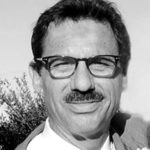
Robert Maass
A short documentary film premiere featuring the sustainably-managed tropical forest in Uaxactun, Guatemala's Maya Biosphere Reserve The Brooklyn Bridge Forest initiative proposes replacing the aging boardwalk of the bridge with one of the world’s most sustainably harvested tropical hardwoods, grown in the Maya Biosphere Reserve (MBR) of Guatemala. The dense species of hardwood, called manchiche, would be harvested in the MBR’s Uaxactun community forest concession. Since 2000, Uaxactun’s inhabitants have learned how to manage their 208,000-acre forest to strict FSC standards. Trees are harvested on a completely sustainable 40-year cycle. The Rainforest Alliance heralds their practices as a worldwide model for sustainable forestry. The timber harvest is a crucial economic element to the prosperity of the community, which, though remote and small in population, has lived sustainably from their forest resources for 100 years.
Chad Oliver
, Yale School of Forestry and Environmental Studies
Creating the Opportunity for Forests to Increase Biodiversity, Reduce Fossil Fuels, Sequester CO2, and Employ People—with Transparent, Sustainable Management Forests are an opportunity and an underperforming treasure. Many contain endangered species. They occupy 27% of the world’s land but employ 0.4% of the world’s workforce. Only 20% of the wood that grows each year is harvested—and only 6% is used for construction. We could reduce fossil fuel consumption and CO2 emissions by 15% to 20% by building with more wood. We could employ 6% of the world’s workforce by using high technology, small equipment in the woods. We are developing technologies to manage the forest to save species and provide wood products and jobs and other values transparently.

Alan Organschi
, Yale School of Architecture
Timber City: The biomass scenario The Timber City research and development project examines an alternative to fossil fuels: the transformation of dense urban centers from CO2 emitters into massive carbon sinks, made possible through the broad implementation of emerging mass timber construction technologies and regulatory and economic policies that promote timber building in cities and sustainable management of source forests. Based on the carbon storage potential of a mass timber urban building prototype deployed at the scale of a city district and the capacity of regional source forests to supply it sustainably, Timber City extrapolates both direct and associated benefits of a systemic shift from a mineral- to forest-based building economy and describes a supply chain model that places resilient, biodiverse forests in synergy with convivial, densely populated cities.

Marc Rivard
, WoodWorks
Updates from the front lines of wood construction and the mass timber movement in the Northeast Marc will focus on recent building code interpretations, fire and blast testing, and other techincal developments as they pertain to tall wood buildings in the wood renaissance.

Jeremy Radachowsky
, Wildlife Conservation Society
More Trees, Fewer Cows: The battle against cattle in Central America's forests Cattle are the most significant global threat to tropical forests and biodiversity. Between cattle pasture and cropland for animal feed, the livestock sector covers 30% of the earth’s land surface and contributes 14% of total climate emissions. Demand for beef is projected to increase 70% by 2050, driven by a 30% human population increase and a burgeoning middle class. To address global climate change, forest loss, food security, and human health, we must implement policies and practices to promote more trees and fewer cows. This talk tells the story of cows and trees in Central America during the past 15 years, based upon an in-depth analysis synthezing multiple types of information, including remote sensing and forest flyovers.

Jeff Spiritos and Pratik Raval
, Associate Director, Transsolar KlimaEngineering
Opportunities for mass timber in climate responsive building design Jeff will convey how mass timber completes the creation of a healthy building system. Pratik provides direction for high-comfort low environmental impact design on a diverse range of projects. His organic style of design thinking and focus on creating human-centric solutions generate project-specific, often innovative, environmental concepts; and his strategic approach to communicating the new concepts helps them turn into reality. Using built project case studies, he will discuss the application of timber in the holistic climate-responsive design for creating comfortable indoor environments in large-scale buildings without HVAC systems.

Benjamin Walmer
Agroecological Design & Master Planning Presentation of the Ironbound Farm project-in-progress, including explanations of agroforestry, fungiculture, wild foods, hard cider, and the culinary and jobs creation aspects of this agroecological and food systems project.

Maxwell Webster
Yale School of Forestry and Environmental Studies
Strategies and Innovations for Community Forest Management This presentation will explore innovative strategies for supporting best management practices around community forestry in both urban and rural contexts. In particular, we will address how tools, such as small-mill technology, can be used by community forests to adapt forest management practices and successfully market products to new customers. Not only will we address issues concerning forest operations but also how to create a successful business plan employing these strategies while growing local and regional supply chains and reengaging a greater public interest in successful forest management.

Sarah Jane Wilson
, International Forestry Resources and Institutions (IFRI), University of Michigan
The Future of Forest Work and Communities: Engaging the next generation of conservation leaders and entrepreneurs from within rural and forest landscapes

Marie Zahn
Columbia University
“Everything we do, it’s cedar:” First Nation and ecosystem-based foresters’ relationships and practices with western redcedar (Thuja plicata) in Coastal British Columbia People’s values and attitudes regarding the natural world determine the level of care with which they approach the use of natural resources. We studied how human relationships with nature influence people’s actions using western redcedar (Thuja plicata), a major forest tree of northwestern North America, as a study system. Interviews were conducted with Northwest Coast Indigenous people and ecosystem-based foresters in coastal British Columbia. Both groups expressed a personal—often spiritual—connection with nature, both value long-term management strategies, and both have similar environmental concerns. First Nation individuals have a unique spiritual relationship with western redcedar that correlates to both everyday and ceremonial practices with cedar, while ecosystem-based foresters have personal and academic relationships broadly with nature. These results are particularly useful to show that people from varied cultural backgrounds can care for the environment in similar ways and to demonstrate the nexus between relationships and practices with natural resources.